




STAY IN TOUCH
The roles of the family doctor in the primary health care team
SEE YOU AT THE CONFERENCE
DUMELA!
As the recipient of the 2026 Montegut Scholarship for the WONCA North American Region, I was grateful for the opportunity to attend the WONCA Africa Region Conference in Botswana ...
As the recipient of the 2026 Montegut Scholarship for the WONCA North American Region, I was grateful for the opportunity to attend the WONCA Africa Region Conference in Botswana. As a family physician from the Caribbean, I was particularly drawn to this conference because of the deep connections between our regions. The ancestral and cultural ties that shape our populations, our shared vulnerability to climate change, and the economic constraints that influence many of our health systems made Africa a meaningful setting in which to learn, exchange perspectives, and explore how colleagues working in similar contexts respond to challenges we also face at home.
Stepping outside our region provided a valuable opportunity to view our own practice through a broader lens, discover approaches that may be adapted to our setting, and appreciate the many experiences and aspirations we share despite the distance between us. I returned to Trinidad and Tobago with practical ideas, renewed purpose, and a stronger sense of belonging to a global family medicine community.
That sense of belonging began with an unexpected icebreaker. During a preconference session of the WONCA Working Party on Women and Family Medicine, participants were invited to describe themselves as an animal. I chose the elephant, initially because I felt conspicuous as one of the few Caribbean participants. Yet the symbolism soon changed, an elephant may stand apart, but it belongs within the family. Different in geography, united in purpose, the conference theme “we are one” became meaningful.
For me, that is the strongest reason a family physician from North America or the Caribbean should make the journey to Africa. We travel expecting to learn about another region, only to discover how much we share. Discussions on planetary health highlighted challenges familiar to Caribbean physicians, from climate-related disruptions to the delivery of essential services. At the same time, learning how African colleagues use community engagement, hazard mapping, facility vulnerability assessments, and collaborative action planning to strengthen resilience showed that shared challenges can also inspire shared solutions.
The same spirit of exchange emerged when I co-led a Balint workshop with colleagues from Cuba, South Africa, Nigeria, Uganda, Zambia and Botswana. Exploring the emotional and relational dimensions of patient care revealed common experiences that transcended borders, cultures, and health systems. These conversations reinforced that some of our most valuable learning occurs when we step outside our own environments and view our work through the experiences of others.
The value of such a journey ultimately lies in what we bring home: new ideas, new perspectives, and new relationships that continue long after the conference ends. By crossing regional boundaries, we strengthen not only our own practice but also the global family medicine community to which we all belong.
If you are a family physician in North America or the Caribbean, I encourage you to plan for Cape Town. You will return with more than conference notes; you will return with a deeper understanding that, in family medicine, we truly are one.
Ke a leboga.
Zahra Mendoza
Family physician
Trinidad and Tobago

WHY WONCA AFRICA MATTERS FOR FAMILY MEDICINE IN ZAMBIA
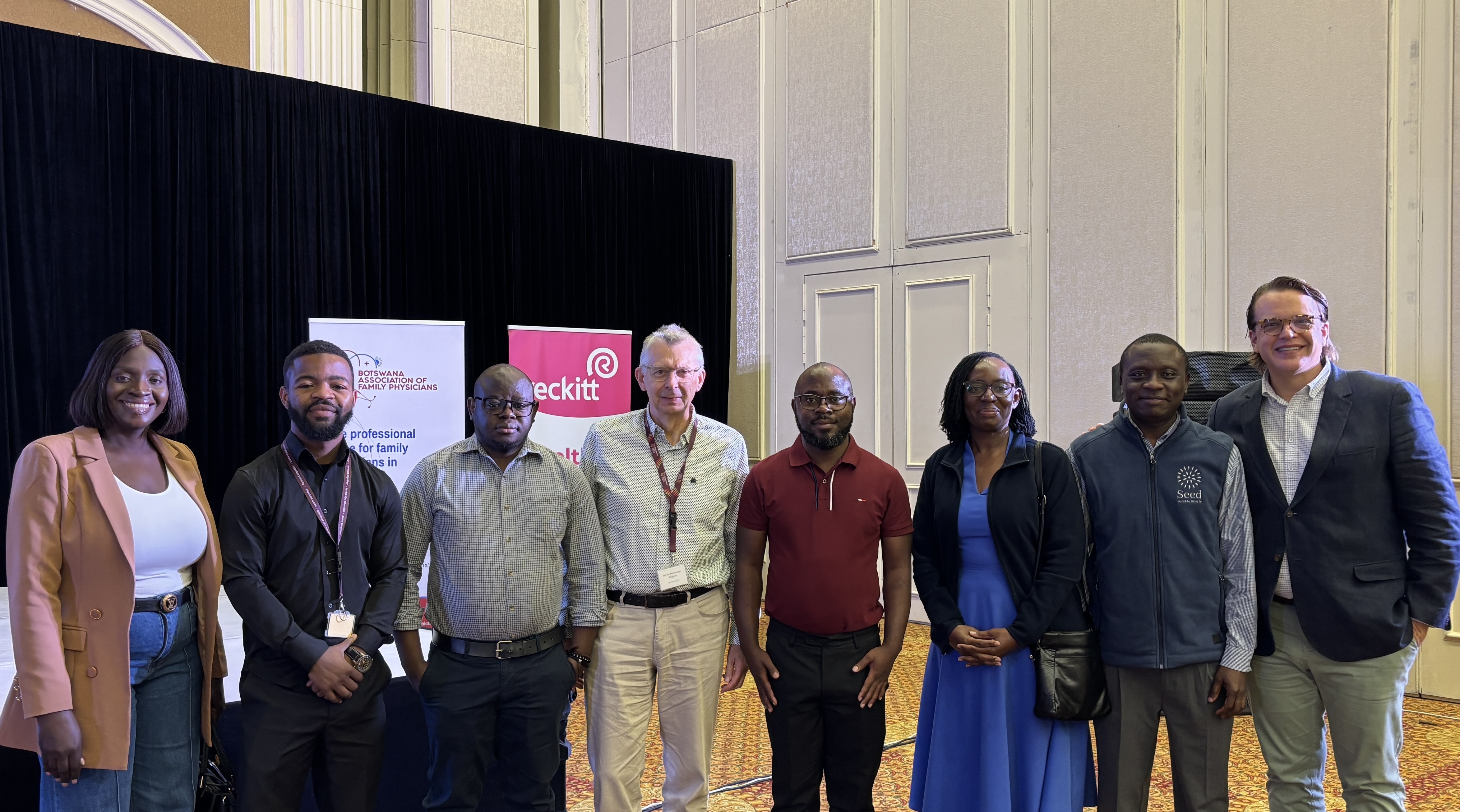
I have my entire professional career in Zambia, including many years working alongside colleagues at the University of Zambia to help grow Family Medicine as a new academic discipline and clinical specialty ...
I have my entire professional career in Zambia, including many years working alongside colleagues at the University of Zambia to help grow Family Medicine as a new academic discipline and clinical specialty.
That made attending WONCA Africa 2026 in Gaborone particularly meaningful.
Family Medicine in Zambia is still young. Our postgraduate training program has grown, graduates are increasingly taking on faculty and leadership roles, and the specialty is finding its place within the wider health system. But building a new discipline can sometimes feel like a relatively small group of people trying to solve very large problems. WONCA Africa reminds us that we are not doing this alone.
In Gaborone, Zambian family physicians were part of a much larger African community wrestling with many of the same questions we face at home: How do we train enough excellent family physicians? How do we develop and retain faculty? How do we build research capacity? And how do we demonstrate the contribution Family Medicine can make to stronger primary health care?
The PRIMAFAMED meeting preceding the conference made those connections even more tangible. Zambia participated alongside Family Medicine departments from across the continent in conversations about academic capacity, advocacy, research, leadership and the future of the discipline. Seeing colleagues who were once our trainees in Zambia now participating as faculty, researchers and leaders was especially rewarding! For me, that is why gatherings like WONCA Africa matter.
For a growing Family Medicine community like Zambia's, they help us see ourselves as part of something larger. We bring home ideas, relationships, mentors, collaborators and, perhaps most importantly, a renewed sense of what is possible.
In 2027, WONCA World comes to Cape Town. For colleagues across Zambia and the region, I hope we see it not just as a global conference happening in Africa but as an opportunity for African Family Medicine to help shape the global conversation about the future of primary health care.
Bassim Birkland MD MPH
Senior Director Clinical Practice and Education
Seed Global Health
Based in Lusaka, Zambia

GO ANYWAY: WHY CAPE TOWN IS WORTH THE JOURNEY
A few years ago, just after the pandemic began, I started the International Consortium of Primary Care Big Data Researchers-INTRePID (www.intrepidprimarycare.org) ...
A few years ago, just after the pandemic began, I started the International Consortium of Primary Care Big Data Researchers-INTRePID (www.intrepidprimarycare.org)
In the beginning, I wasn't following any grand strategy. I simply reached out to people I knew. One colleague led to another, and before long we had researchers from nine countries across North America, Europe, and the Asia-Pacific region working together. Over time, colleagues from Latin America joined us and the network continued to grow.
As exciting as that was, I gradually realized something important. If INTRePID was going to be truly global, it couldn't just be built from the people already in my address book. I wanted to learn from family doctors and researchers working in different health systems, cultures, and settings. I wanted perspectives that challenged my assumptions and experiences that would broaden my understanding of primary care around the world.
And I came to realize that those relationships cannot be built entirely online.
One day, my Chilean colleague Angela gave me some advice. "Karen, I think this year you have to go to WONCA Ibero-America and WONCA Africa. The Africans are like the Ibero-Americans. They need to touch you, feel you..." As she said this, she rubbed her fingers and thumb together to emphasize something tactile.
At first, I laughed. Since the pandemic, many of us have become very good at collaborating virtually. INTRePID itself was built through Zoom meetings and emails. We can exchange ideas, share data, and hold productive discussions without ever leaving our desks.
But Angela was right. There are limits to what can happen through a screen. Some things simply do not translate online. Trust, friendship, and a genuine sense of community grow differently when you share a meal, walk together between conference sessions, or continue a conversation long after the formal program has ended.
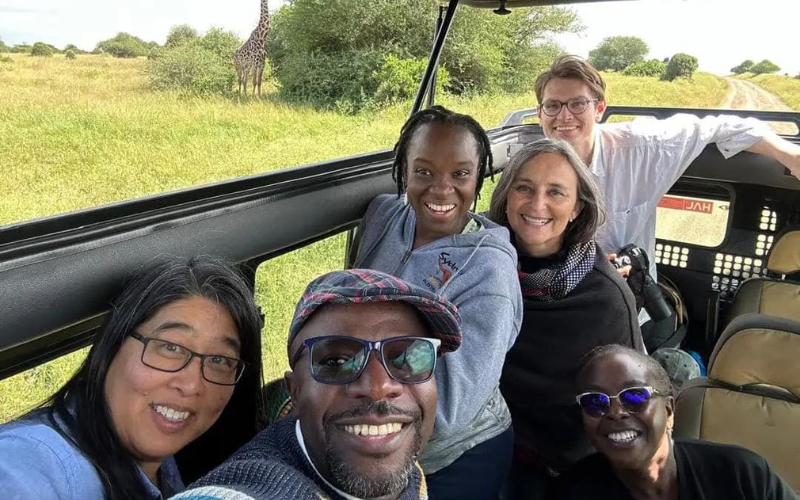
So in 2024, I boarded a plane to Nairobi for the WONCA Africa Conference. It was my first trip to Africa. I didn't know a single person attending. If I'm honest, I felt a little nervous.
We've all had that experience of walking into a conference reception and wondering whether we'll spend the evening standing alone, looking for someone to talk to. Flying halfway around the world to a conference where I knew nobody felt like a bit of a gamble.
What happened next surprised me. Within minutes, people were introducing themselves, inviting me into conversations, and making me feel welcome. Complete strangers became colleagues, and colleagues quickly became friends. I met family doctors from across Africa and around the world. Despite our different countries, health systems, and practice settings, there was an immediate sense of connection. We all shared the same commitment to caring for patients, strengthening communities, and improving primary care.
What struck me most was how quickly I felt at home. I arrived in Nairobi knowing no one. I left with new friends, new collaborators, and a much broader understanding of family medicine around the world.
That experience reminded me that one of the greatest benefits of attending an international conference is not necessarily what happens in the lecture hall. It is the conversations over coffee, the stories exchanged over dinner, the chance encounters that spark new ideas, and the relationships that continue long after everyone has returned home.
That is why I am excited about the 2027 WONCA World Conference in Cape Town. If you're wondering whether it is worth travelling all that way, or worrying that you won't know anyone, my advice is simple: go anyway.
You will learn something new. You will hear stories that challenge your assumptions. You will see family medicine through a different lens. And if my experience is any guide, you'll leave with friends and colleagues from places you never expected.
Family medicine may look different around the world, but the values that unite us are remarkably similar.
I know I'll be in Cape Town. I hope you will be too.
See you in Cape Town.
Karen Tu
Family Physician, Researcher, and Founder of INTRePID
Canada




CONFERENCE SECRETARIAT
GUARANT International spol. s r.o.
Českomoravská 19
190 00 Prague 9
Czech Republic
Website: www.guarant.cz
CONTACT US


SUBSCRIBE
© 2026 - GUARANT International spol. s r.o.
Powered by APPTIDE