



STAY IN TOUCH
The roles of the family doctor in the primary health care team
NEW ARTICLE!
DUMELA!
As the recipient of the 2026 Montegut Scholarship for the WONCA North American Region, I was grateful for the opportunity to attend the WONCA Africa Region Conference in Botswana ...
As the recipient of the 2026 Montegut Scholarship for the WONCA North American Region, I was grateful for the opportunity to attend the WONCA Africa Region Conference in Botswana. As a family physician from the Caribbean, I was particularly drawn to this conference because of the deep connections between our regions. The ancestral and cultural ties that shape our populations, our shared vulnerability to climate change, and the economic constraints that influence many of our health systems made Africa a meaningful setting in which to learn, exchange perspectives, and explore how colleagues working in similar contexts respond to challenges we also face at home.
Stepping outside our region provided a valuable opportunity to view our own practice through a broader lens, discover approaches that may be adapted to our setting, and appreciate the many experiences and aspirations we share despite the distance between us. I returned to Trinidad and Tobago with practical ideas, renewed purpose, and a stronger sense of belonging to a global family medicine community.
That sense of belonging began with an unexpected icebreaker. During a preconference session of the WONCA Working Party on Women and Family Medicine, participants were invited to describe themselves as an animal. I chose the elephant, initially because I felt conspicuous as one of the few Caribbean participants. Yet the symbolism soon changed, an elephant may stand apart, but it belongs within the family. Different in geography, united in purpose, the conference theme “we are one” became meaningful.
For me, that is the strongest reason a family physician from North America or the Caribbean should make the journey to Africa. We travel expecting to learn about another region, only to discover how much we share. Discussions on planetary health highlighted challenges familiar to Caribbean physicians, from climate-related disruptions to the delivery of essential services. At the same time, learning how African colleagues use community engagement, hazard mapping, facility vulnerability assessments, and collaborative action planning to strengthen resilience showed that shared challenges can also inspire shared solutions.
The same spirit of exchange emerged when I co-led a Balint workshop with colleagues from Cuba, South Africa, Nigeria, Uganda, Zambia and Botswana. Exploring the emotional and relational dimensions of patient care revealed common experiences that transcended borders, cultures, and health systems. These conversations reinforced that some of our most valuable learning occurs when we step outside our own environments and view our work through the experiences of others.
The value of such a journey ultimately lies in what we bring home: new ideas, new perspectives, and new relationships that continue long after the conference ends. By crossing regional boundaries, we strengthen not only our own practice but also the global family medicine community to which we all belong.
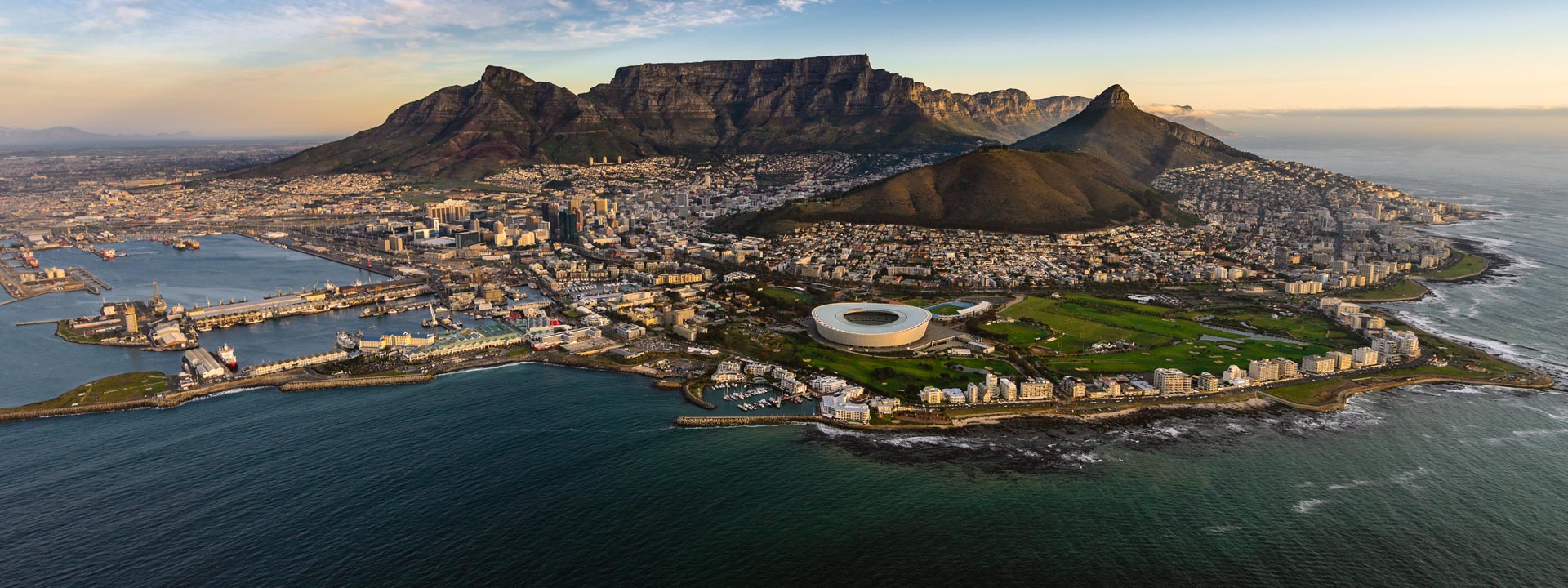
If you are a family physician in North America or the Caribbean, I encourage you to plan for Cape Town. You will return with more than conference notes; you will return with a deeper understanding that, in family medicine, we truly are one.
Ke a leboga.
Zahra Mendoza
Family physician
Trinidad and Tobago





CONFERENCE SECRETARIAT
GUARANT International spol. s r.o.
Českomoravská 19
190 00 Prague 9
Czech Republic
Website: www.guarant.cz
CONTACT US


SUBSCRIBE
© 2026 - GUARANT International spol. s r.o.
Powered by APPTIDE